📸 Why I Use Back Button Focus—and Why You Might Want To Try It
Have you ever missed a great shot because your camera focused on the wrong subject? Or struggled with keeping your subject sharp while recomposing your frame? If so, it might be time to try Back Button Focus — a simple change that can make a big difference in your photography.
Over the years, I’ve had many photographers ask why I prefer to set up Back Button Focus on my cameras. For me, it’s a simple change that has made a huge difference in how I shoot—especially when it comes to control, speed, and consistency.
In this post, I’ll explain what Back Button Focus (BBF) is, share the benefits and drawbacks, and give you a general setup guide so you can start using it on your own camera.
Have you ever missed a great shot because your camera focused on the wrong subject? Or struggled with keeping your subject sharp while recomposing your frame? If so, it might be time to try Back Button Focus — a simple change that can make a big difference in your photography.
Over the years, I’ve had many photographers ask why I prefer to set up Back Button Focus on my cameras. For me, it’s a simple change that has made a huge difference in how I shoot—especially when it comes to control, speed, and consistency.
In this post, I’ll explain what Back Button Focus is, share the benefits and drawbacks, and give you a general setup guide so you can start using it on your own camera.
🤔 What Is Back Button Focus?
By default, your camera’s shutter button does three things:
- Activates the light meter (half-press)
- Activates the autofocus (half-press)
- Takes the photo (full-press)

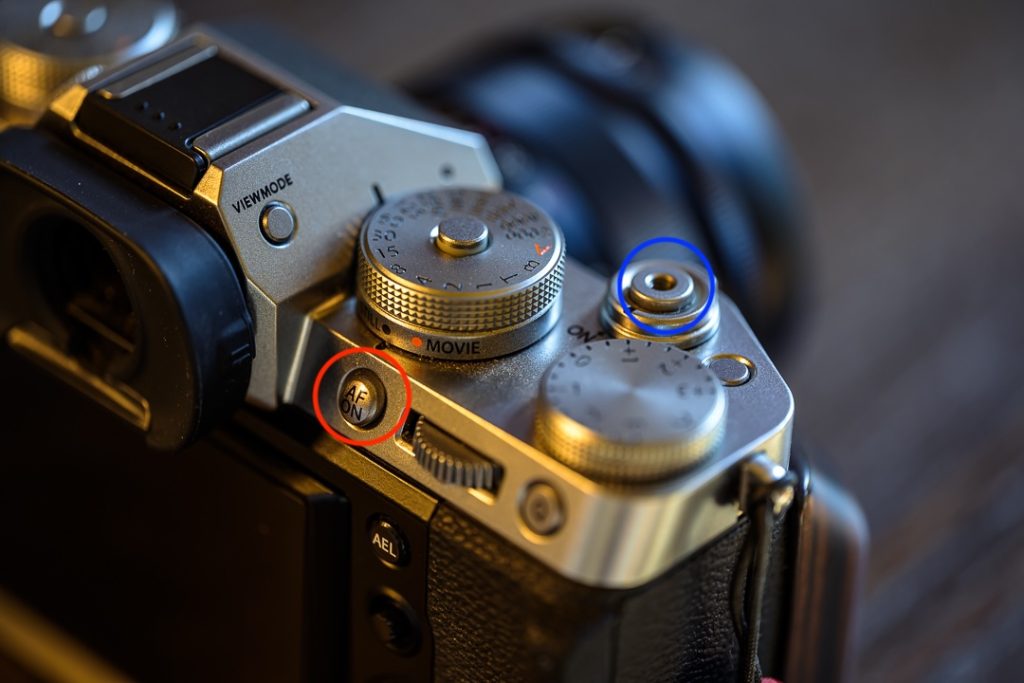
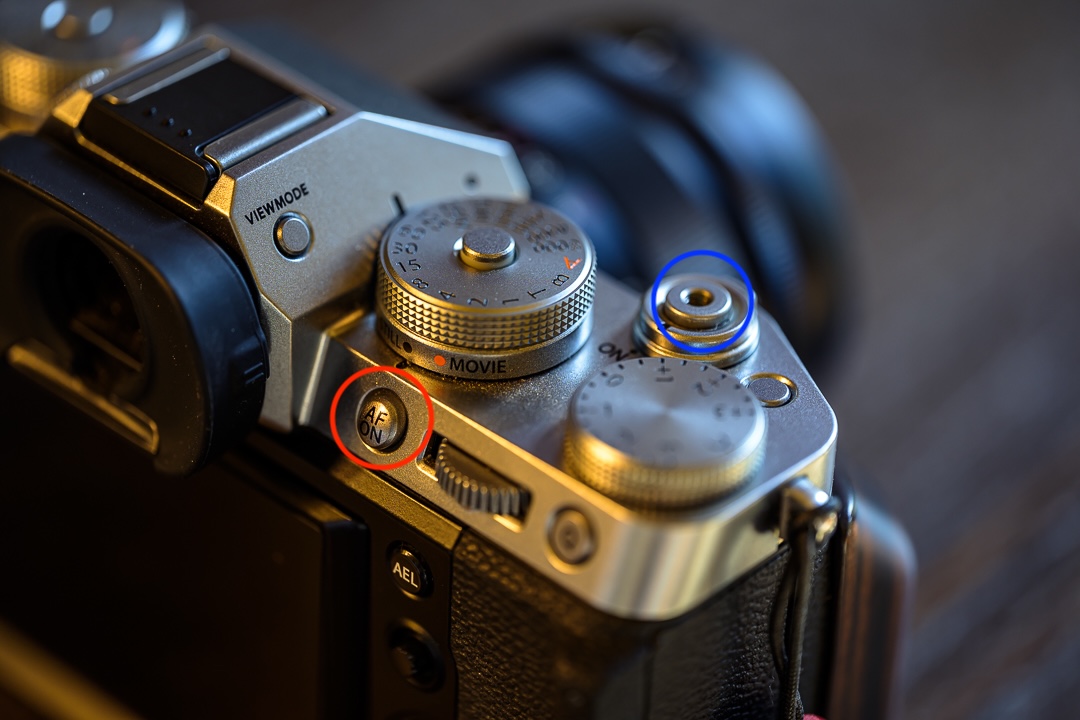
With Back Button Focus, we move the focusing function from the shutter button to a dedicated button—typically labeled AF-ON or AE-L/AF-L—found on the back of the camera. This lets you activate autofocus with your thumb while your index finger handles the shutter. It’s a small change, but it gives you more control over focusing, reduces missed shots, and allows you to switch between focus modes quickly.
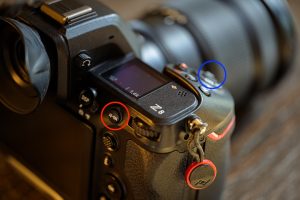
Back button focus on a Nikon Z8. Blue circle is where the shutter button is located and the red circle is the function button programmed to activate autofocus.
✅ Benefits of Back Button Focus
1. The Best of AF-C, AF-S, and Manual—All in One
With BBF, you can leave your camera in AF-C (Continuous autofocus) and treat it like AF-S (Single) or even Manual focus whenever you want:
• Tracking a moving subject? Hold the AF-ON button to continuously focus.
• Shooting landscapes or still subjects? Focus once, release the button, and shoot multiple frames without refocusing.
• Need precise manual focus? Let go of the AF-ON button and fine-tune manually—your camera won’t override it when you press the shutter.
2. Focus and Recompose—With Less Error
This was the go-to method with DSLRs and older SLRs. Since most autofocus points were limited and centered within your viewfinder, you’d often focus on your subject, recompose your frame, and then shoot. But doing this with the shutter button required careful half-pressing—not too hard, not too soft. I’ve accidentally taken shots early or lost focus this way. With BBF, that’s no longer a problem. You focus once with your thumb (then release the button), recompose, and press the shutter—no surprises.
3. Better Workflow when Shooting with ND Filters
Shooting with neutral density filters may require you to focus prior to installing the filter(s) in front of your lens. Traditionally, with focus linked to the shutter button, this would require you to half press to focus and then turn off the autofocus on your camera.
With BBF enabled, turning off autofocus is as easy as not pressing your assigned focus button. Overall, this just creates an easier workflow when shooting with ND filters.

❌ Drawbacks of Back Button Focus
No method is perfect, and BBF isn’t for everyone. Here are a few things to consider:
• Learning Curve: It takes time to retrain your muscle memory. At first, you may forget to press the focus button or fumble between the two.
• One-Handed Operation: For quick snapshots or when you’re shooting one-handed, Back Button Focus can be awkward—especially on smaller cameras.
• Handing Your Camera to Others: If someone unfamiliar with Back Button Focus uses your camera, they may not get a properly focused shot. I solve this by setting up my Fuji X100VI and Ricoh GR3x so I can quickly toggle focus back to the shutter button when needed. 👍🏻
🛠️ How to Set Up Back Button Focus (General Guide)
While the exact steps vary by camera brand, here’s the basic process:
- Assign a Back Button for AF
- Many cameras have an AF-ON button pre-assigned. If not, assign one of your camera's function buttons to activate autofocus through the menu.
- Disable AF from the Shutter Button
- Turn off autofocus activation for the shutter in your settings menu.
- Set Your Default Autofocus Mode
- On most cameras, this should be set to AF-C.
- On FujiFilm cameras, you can also set it to Manual, and then change the "Instant AF Setting" to AF-C. I have found this to be the best setup for me personally.
- Check your camera’s manual or menu for switching AF modes.
For specific instructions, see my setup videos for the Fuji X100VI and Nikon Z8/Z9.
🧠 Final Thoughts
Back Button Focus gives you more control, more flexibility, and fewer focus-related mistakes—especially in demanding situations like wildlife, sports, and landscapes.
It’s not for everyone, and it does take a little adjustment. But if you’re serious about improving your technique and getting more consistent results, BBF is worth the experiment. I’ve got every autofocus-capable camera I own set up this way—and I haven’t looked back.
If you haven’t tried it yet, give it a shot. And if you already use it, I’d love to hear how it’s changed your photography—drop a comment below!
Click here for my YouTube video on Back Button Focus.
Related Images:

Most Recent Blog Posts
📸 Why I Use Back Button Focus—and Why You Might Want To Try It